
EOL transition guide · Published
Transitioning from the Micron 2550 Series to the Micron 2650 Series
A qualification-focused guide to moving an affected Micron 2550 client SSD design to the current Micron 2650 series.
On this page
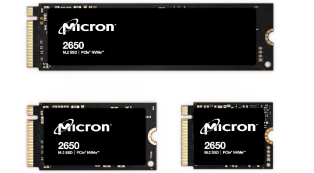
For programs affected by the Micron 2550 lifecycle transition, the Micron 2650 NVMe SSD is the current client-series qualification path. It keeps the PCIe Gen4 NVMe and single-sided M.2 design family while moving to Micron’s ninth-generation 3D NAND.
Do not treat the series name alone as proof of interchangeability. Confirm the form factor, capacity, security configuration, firmware behavior, thermal limits, host support, and the exact replacement part number before approving the change.
The full 2650 specifications are in Micron’s current 2650 product brief.
Micron 2550 and 2650 at a Glance
The maximum values below vary by capacity and test condition. Compare the exact capacities under qualification, not just the family maximum.
| Feature | Micron 2550 | Micron 2650 |
|---|---|---|
| NAND | Micron 232-layer TLC | Micron G9 276-layer TLC |
| Form factors | M.2 2230, 2242, 2280 | M.2 2230, 2242, 2280 |
| Capacities | 256GB, 512GB, 1TB | 256GB, 512GB, 1TB |
| Interface | PCIe Gen4, NVMe 1.4 | PCIe Gen4, NVMe 1.4c |
| Sequential read | Up to 5,000 MB/s | Up to 7,000 MB/s |
| Sequential write | Up to 4,000 MB/s | Up to 6,000 MB/s |
| Random read | Up to 550 KIOPS | Up to 1,000 KIOPS |
| Random write | Up to 600 KIOPS | Up to 1,000 KIOPS |
| Endurance | Up to 600 TBW | Up to 600 TBW |
| Security options | TCG Pyrite and TCG Opal configurations | TCG Pyrite and TCG Opal configurations |
The performance figures are not a system-level guarantee. Host platform, workload, capacity, firmware, temperature, and power policy affect measured results.
What Changes in the 2650
Micron’s 2650 documentation identifies three practical changes for qualification:
- G9 TLC NAND with a six-plane architecture and an I/O rate up to 3,600 MT/s;
- higher maximum sequential and random performance than the 2550 family; and
- the NVMe 1.4c revision while retaining PCIe Gen4 and the same three M.2 sizes.
The 2650 remains a client SSD for PCs and notebooks. A system that needs data-center endurance, power-loss protection behavior, hot-plug serviceability, or data-center quality-of-service targets should be evaluated against a data-center SSD family instead.
Starting Part-Number Cross-Reference
The table below is a qualification starting point. Confirm current production status and the complete replacement MPN with Edge and Micron before ordering.
| Micron 2550 | Micron 2650 candidate | Form factor | Capacity | Security |
|---|---|---|---|---|
| MTFDKBK256TGE-1BL1AABYY | MTFDKBK256TGW-1BP1AABYY | M.2 2230 | 256GB | Non-SED / TCG Pyrite |
| MTFDKBK256TGE-1BL15ABYY | MTFDKBK256TGW-1BP15ABYY | M.2 2230 | 256GB | SED / TCG Opal |
| MTFDKBA256TGE-1BL1AABYY | MTFDKBA256TGW-1BP1AABYY | M.2 2280 | 256GB | Non-SED / TCG Pyrite |
| MTFDKBA256TGE-1BL15ABYY | MTFDKBA256TGW-1BP15ABYY | M.2 2280 | 256GB | SED / TCG Opal |
| MTFDKBK512TGE-1BK1AABYY | MTFDKBK512TGW-1BP1AABYY | M.2 2230 | 512GB | Non-SED / TCG Pyrite |
| MTFDKBK512TGE-1BK15ABYY | MTFDKBK512TGW-1BP15ABYY | M.2 2230 | 512GB | SED / TCG Opal |
| MTFDKBA512TGE-1BK1AABYY | MTFDKBA512TGW-1BP1AABYY | M.2 2280 | 512GB | Non-SED / TCG Pyrite |
| MTFDKBA512TGE-1BK15ABYY | MTFDKBA512TGW-1BP15ABYY | M.2 2280 | 512GB | SED / TCG Opal |
| MTFDKBK1T0TGE-1BK1AABYY | MTFDKBK1T0TGW-1BP1AABYY | M.2 2230 | 1TB | Non-SED / TCG Pyrite |
| MTFDKBK1T0TGE-1BK15ABYY | MTFDKBK1T0TGW-1BP15ABYY | M.2 2230 | 1TB | SED / TCG Opal |
| MTFDKBA1T0TGE-1BK1AABYY | MTFDKBA1T0TGW-1BP1AABYY | M.2 2280 | 1TB | Non-SED / TCG Pyrite |
| MTFDKBA1T0TGE-1BK15ABYY | MTFDKBA1T0TGW-1BP15ABYY | M.2 2280 | 1TB | SED / TCG Opal |
Qualification Checklist
- Match the full old and candidate MPNs, including security configuration and packaging.
- Confirm M.2 length, component height, connector keying, and thermal solution.
- Check BIOS, NVMe driver, management-tool, and firmware compatibility.
- Run representative performance, power-cycle, thermal, and security tests.
- Record the approved firmware and replacement MPN in the program’s controlled documentation.
Send us the affected 2550 part number and host platform, and our team can help identify the 2650 configuration to evaluate.